Choosing a browser engine is one of the most consequential decisions a browser team makes. The engine determines how pages are parsed, rendered, secured, updated, and tested against a web platform that changes every day.
Noorani uses Chromium as its technical foundation. That choice is not an endorsement of every product built with Chromium, nor does it mean Noorani inherits another browser’s priorities unchanged. It means we begin with a mature open-source web platform and concentrate our work where Noorani can make a meaningful difference: privacy, calm design, and Muslim-centered utility.
What Chromium actually provides
Chromium is an open-source browser project, not simply the consumer version of Chrome. It includes the Blink rendering engine, the V8 JavaScript engine, networking and media components, sandboxing, developer tools, and a large body of compatibility work. The Chromium project is developed in public by contributors from multiple organizations.
This foundation solves an enormous class of problems that users should never have to think about. Modern websites rely on evolving standards for layout, video, encryption, accessibility, graphics, and application-like behavior. A browser must interpret those standards consistently while defending against hostile content.
Compatibility is a user feature
A principled browser that cannot open the sites people need is not useful for long. Banking portals, learning platforms, government services, video calls, and workplace tools all contain assumptions about browser behavior. Chromium’s broad compatibility gives Noorani a dependable baseline across that messy reality.
Compatibility is more than visual accuracy. Forms must submit correctly, keyboard navigation must work, media permissions must be understandable, and web applications must remain responsive. Starting from a widely exercised engine lowers the chance that ordinary browsing becomes a daily troubleshooting exercise.
Security depends on maintenance
A browser processes untrusted code from the open internet, so the security workload never ends. Sandboxing, process isolation, memory-safety improvements, certificate handling, and rapid patch delivery all require sustained engineering.
The Chromium architecture uses multiple processes to separate tabs and sensitive browser functions. Google’s public Chromium sandbox documentation explains how restricted processes help limit what compromised rendering code can reach. No architecture eliminates risk, but a mature security model and active update stream are stronger starting points than a small team inventing its own engine.
For Noorani, choosing Chromium creates an obligation: track upstream security work, test updates, and ship them responsibly. An engine choice is only as good as the maintenance discipline behind it.
Open source creates room to choose
Chromium exposes source code that can be inspected, modified, and built into distinct products. That matters because a browser is not only its rendering engine. Product behavior also comes from defaults, bundled services, interface decisions, network requests, extension policies, and the features added around the engine.
Noorani can therefore use Chromium’s web compatibility while making independent decisions about the experience around it. We can remove distractions, question unnecessary connections, build tracker blocking into the product, and design features that serve Muslim routines without turning those routines into advertising data.
What Noorani adds
Faith-aware utility close to the device
Noorani brings prayer times, Qibla, and intentional browsing tools into the browser itself. Our prayer-time system calculates schedules on the device, which reduces dependence on a remote service for a daily feature.
Privacy as a product decision
A secure engine does not automatically create a private browser. Privacy depends on which services are contacted, what telemetry exists, how trackers are handled, and whether defaults respect the user. We treat these as deliberate product choices. Our guide to browser fingerprinting shows why protection must go beyond deleting cookies.
A calmer interface
Many browsers compete by adding feeds, promotions, assistants, and engagement loops. Noorani’s direction is different. The interface should help you reach what you intended to do, then get out of the way. Calm is not an empty screen; it is the removal of needless pressure.
The trade-offs of Chromium
Chromium’s popularity brings genuine concerns. A web dominated by one engine can weaken independent implementation and concentrate influence over standards. Its codebase is also large, complex, and shaped by needs that are not identical to Noorani’s.
We do not dismiss those trade-offs. Using Chromium means reviewing upstream changes carefully and separating the open engine from product integrations we do not need. It also means being clear with users about our foundation instead of presenting it as a proprietary invention.
The alternative—building and maintaining a new engine—would demand years of specialized work before users received basic compatibility and security. For a focused team, that effort would pull attention away from the privacy and faith-centered experience Noorani exists to create.
A foundation, not the finished product
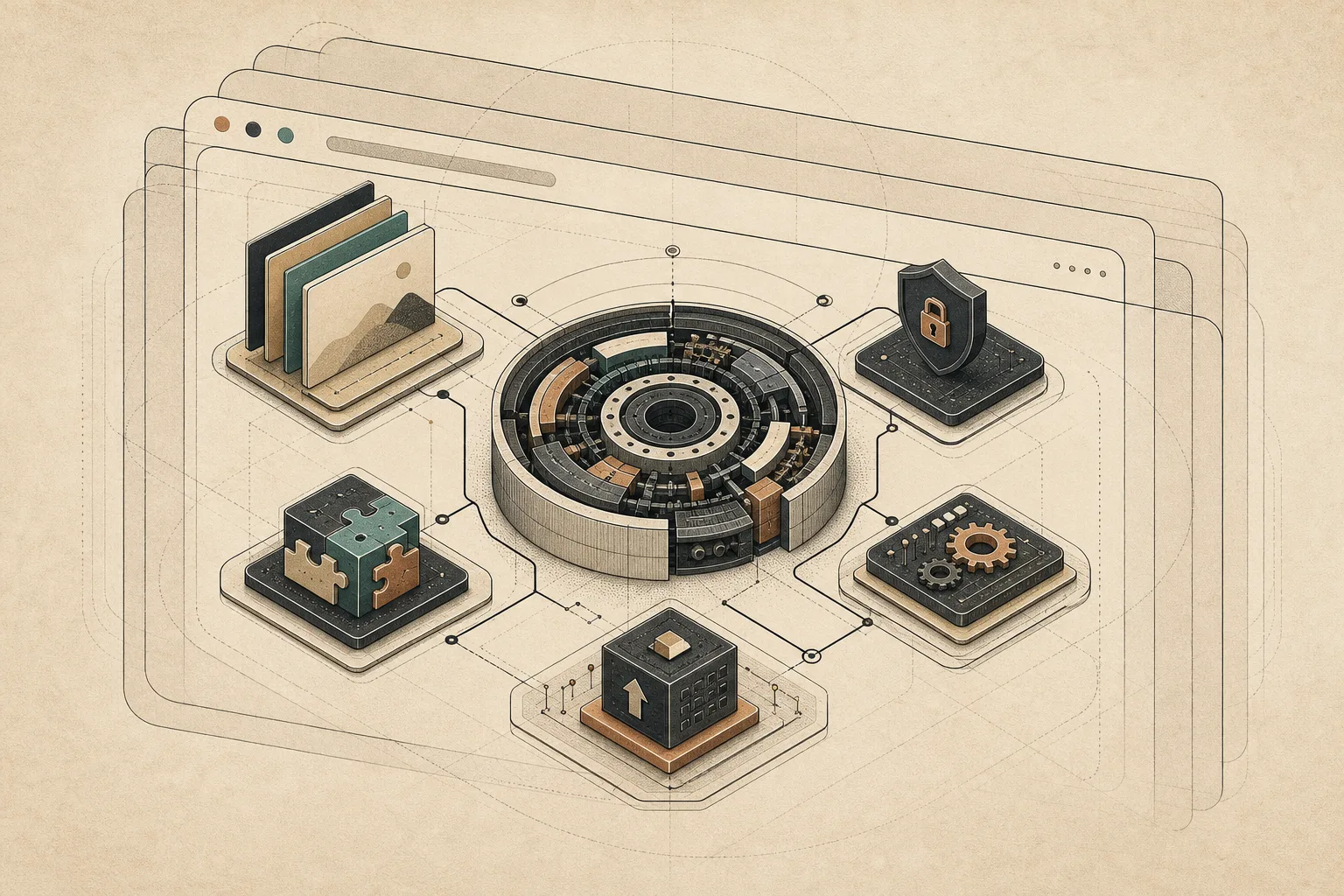
Think of Chromium as infrastructure. It gives Noorani a capable renderer, a hardened process model, and compatibility with the modern web. The finished browser is defined by what we build on top, what we remove, which connections we permit, and whose needs guide the decisions.
Our goal is not technical novelty for its own sake. It is a trustworthy desktop browser that works on the real web while supporting a more intentional relationship with it. Chromium lets us begin from a tested foundation and spend more of our effort on that purpose.
Browse with more intention
Noorani brings prayer times, Qibla, tracker blocking, and privacy into one calm desktop browser built for how Muslims live online.